A Senior’s Beginning Guide to Composting
🌱 Turn Your Kitchen Scraps into Garden Treasures!
Composting isn’t just for master gardeners; it’s a simple, rewarding activity that can help you reduce waste, save money on soil amendments, and give you the most nutrient-rich “food” your flowers and vegetables have ever tasted!
If you’re looking for a low-impact hobby that connects you with nature, composting is perfect. We’ll show you how to start small and keep it easy—no heavy lifting required!
1. 🌟 Why Should I Compost? (The Benefits!)
- Free Fertilizer: Why buy expensive compost and soil? Your trash is your treasure!
- Less Waste: Up to 30% of household waste can be composted. That means fewer trips to the curb!
- Healthier Plants: Compost (often called “black gold”) slowly releases nutrients, helping your plants grow stronger and resist disease.
- Eco-Friendly Fun: It’s satisfying to know you’re helping the planet by recycling your organic matter.
2. 🧺 Picking Your Composting Method (Keep it Simple!)
For beginners, especially those who prefer minimal labor, we recommend one of these two methods:
A. The Easy Indoor Bin (Worm Composting or Vermicomposting)
- What it is: Using a small plastic bin (or even a specialized composter) and friendly Red Wiggler worms to eat your food scraps.
- Best for: Apartment dwellers, those with limited space, or anyone who wants a year-round, enclosed system.
- Pros: Very fast, produces amazing compost tea, odorless when done correctly.
- Cons: Requires feeding the worms, which some find tricky at first.
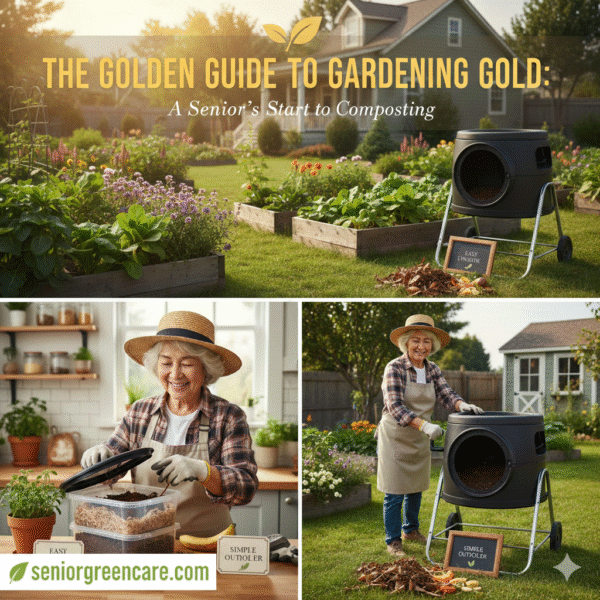
B. The Simple Outdoor Heap or Tumbler
- What it is: A designated pile in your yard or a rotating drum (a tumbler) for easy mixing.
- Best for: Homeowners with a small yard or garden space.
- Pros: Handles larger volumes of yard waste (leaves, grass), requires less attention than worms.
- Cons: Takes longer to “cook” (turn into finished compost).
💡 Senior Tip: If choosing an outdoor bin, get a tumbler! They sit off the ground, preventing bending, and the spinning action is much easier than turning a pile with a fork or shovel.
3. 🍎 What Goes In? (The “Green” and “Brown” Recipe)
A good compost pile needs a balance of two types of materials:
| Material Type | Description | Examples | Function |
| 💚 Greens (Nitrogen) | Moist, fresh materials that heat up the pile. | Fruit/Veggie Scraps, Coffee Grounds, Tea Bags, Fresh Grass Clippings (in moderation) | Provides Protein and Moisture |
| 🤎 Browns (Carbon) | Dry, woody materials that give the pile air and structure. | Dead Leaves, Shredded Paper (non-glossy), Cardboard Egg Cartons, Wood Shavings, Pine Needles | Provides Energy and Airflow |
❌ What to NEVER Compost:
- Meat, Bones, or Dairy: Attracts pests (mice, raccoons) and smells bad.
- Fats/Oils/Grease: Same as above.
- Pet Waste (Dog/Cat Feces): Can contain harmful pathogens.
- Diseased or Pest-Ridden Plants: You’ll just spread the problem!
4. 🥄 The “Cooking” Process (The Easiest Steps)
Once you’ve chosen your spot and gathered your materials, follow these three simple steps:
Step 1: Layer It Up
Start with a base layer of Browns (like twigs or leaves) for drainage. Then, simply alternate layers of Greens and Browns, like a lasagna. Aim for about twice as many Browns as Greens by volume.
Step 2: Add Water (The Sponge Test)
Your pile should feel like a wrung-out sponge—damp, but not dripping. If it’s too dry, the microbes can’t work. If it’s too wet, it gets slimy and smelly. Sprinkle water from a hose or watering can as needed.
Step 3: Turn It (Or Tumble It!)
Your compost needs air. If you have a tumbler, give it a few spins once a week. If you have a heap, turning it with a pitchfork once a month is enough for a beginner. No turning? No problem! It will still break down—it just takes a little longer.
⏰ When is it Ready? Your compost is done when it looks, smells, and feels like rich, dark, crumbly dirt. You should not be able to recognize any of the original items (no recognizable banana peels!). This can take anywhere from two months to a year, depending on the method and effort.
5. 🥳 Using Your “Black Gold”
Congratulations, you’ve made compost! Now, mix it into your potted plants, spread a thin layer around your flower beds, or work it directly into your vegetable garden soil. Please Review our Compost Affiliate Products Here! Great Deals!!
Enjoy the simple pleasure of watching your garden thrive thanks to your own, homemade, golden effort!
Final Thoughts
Composting is a wonderful hobby for seniors looking to stay engaged with nature, reduce waste, and nurture a garden with minimal effort. With the right tools and setup, it becomes an easy, enjoyable activity that offers long-lasting benefits.
Click Here for more resources, product reviews and blogs at SeniorGreenCare.com!